Previous Exit Next
|
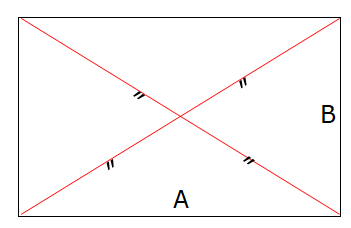
Obtuse angle - an angle over 90° Perpendicular - right angles or 90° or square to the base or horizon. Plumb - 90° to the horizon; vertical gravity pull Level - level to the horizon/earth′s plane Base/Baseline - bottom of angle or set. All set layout is started at a point that is square to a base line. Right Angle - 90° to two sides Right Angle Triangle - one angle of the triangle is 90° Pythagoras theorem - sides "a²+b²=c²". A right angle/90° is created where sides "a" & "b" intersect and "c" is the hypotenuse of the triangle. 3/4/5 rule - Where equal units of 3 and 4 intersect and the hypotenuse is 5 of the same units, an angle of 90° is created Mathematical - "3/4/5 rule & Pythagoras theorem". These triangles can be laid out with tape measures, lengths of materials or chain links. Geometric layout is done with trammel points, beam and chalk lines. Pythagoras Theorem - For a rectangle to be square the diagonals must be equal. Making square - layout tools Lasers - level, plumb, datum lines, squared layout Datum lines - start set here Plywood - the factory edge of a sheet of plywood is considered square. Use a full sheet - 4′x8′- factory corner to establish a set corner. Framing square - a 24″ arm(blade) and a 16″ arm(tongue), meet at an angle of 90°. They are covered by a series of mathematical scales. Angles and timber lengths can be calculated with the framing square′s scales. Speed square - solid piece triangle with both sides the same length, forming 90° and the hypotenuse makes a 45° angle. Combination square - It is composed of a ruled blade and one or more interchangeable adjustable heads that may be affixed to it. The most common head is the standard or square head which is used to lay out or check square and 45° angles. Secret carpenter′s squaring numbers you can prove on your framing square - 3-4-5, 5-12-13, 8-15-17, 7-24-25.
|
Return to Home |